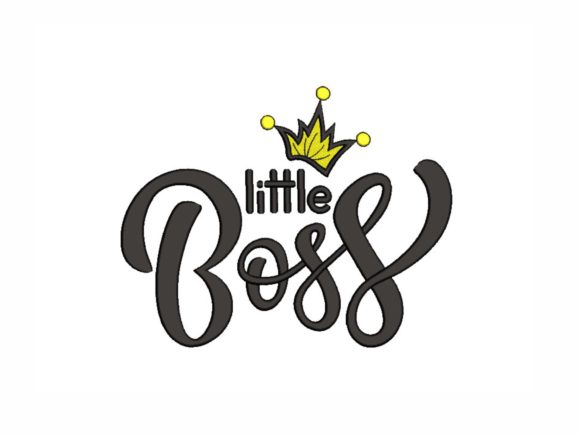
Little Boss: A Designer's Review for Boutique Sweatshirts
As an embroidery designer who spends more time staring at stitch simulations than I do sleeping, I am always on the hunt for designs that bridge the gap between cute and commercial. Recently, I came across Little Boss, a machine embroidery design categorized under Babies. While the product description suggests it is perfect for stitching onto baby onesies and bibs to show who is really in charge, my mind immediately went elsewhere. I wanted to see if this playful motif could hold its own on something heavier, trendier, and far more profitable for small shop products: the premium boutique sweatshirt.
First Impressions: Mood and Layout
When I first loaded the digital embroidery file into my editing software, the immediate vibe was undeniably playful yet bold. The layout of Little Boss feels compact but impactful, which is crucial when you are working with limited real estate on a garment. It doesn't scream "nursery decor" in a way that limits its use; instead, it carries a rustic, modern aesthetic that fits perfectly with current streetwear trends. The stitching personality appears dense enough to create a solid fill without looking like a plastic patch, suggesting a high-quality finished product that feels soft against the skin.
For a boutique brand looking to launch a limited drop, the mood here is key. It strikes a balance between feminine and sassy. It isn't overly decorative or frilly, which means it appeals to a broader audience beyond just traditional baby showers. It feels like a statement piece that says, "I run this house," but with a wink. This versatility is exactly what an Etsy seller needs to maximize the lifespan of a single design asset.
Adapting Little Boss for Sweatshirt Embroidery
Taking a design intended for onesies and scaling it up for sweatshirt embroidery requires a keen eye for detail. Here is how I envision Little Boss performing across different apparel scenarios:
- Neutral Sweatshirts: On cream, oatmeal, or heather grey fleece, the design pops beautifully. The contrast allows the thread colors to stand out without fighting the fabric texture. It feels minimal and chic, perfect for a "coffee run" look.
- Dark Fabric: Placing this on a charcoal or navy hoodie creates a bold, high-contrast statement. However, this is where checking your thread colors becomes critical. You may need to adjust the saturation in your digitizing software to ensure the design doesn't get lost in the deep pile of the fabric.
- Pastel Colors: For a spring collection, pastel pink or mint green hoodies offer a soft, cozy seasonal appeal. Here, Little Boss leans into its cute roots, making it ideal for matching family sets or mother-and-child bundles.
- Oversized Hoodies: The trend of oversized, boxy fits is huge right now. This design works exceptionally well as a left-chest logo alternative. It is small enough not to overwhelm the drape of the fabric but large enough to be readable in lifestyle product photography.
Placement Strategies for Maximum Impact
While the standard placement for baby items is center chest or bib front, custom apparel offers more freedom. For a boutique sweatshirt collection, I recommend testing Little Boss in three specific zones:
- The Left Chest: This is the gold standard for boutique branding. It feels professional and established, elevating the perceived value of the handmade product.
- Sleeve Accents: Running the design vertically down the forearm adds a unique touch that customers love. It turns a basic hoodie into a custom piece.
- Back Neckline: A small iteration of the design just below the collar adds a subtle surprise element, great for social media unboxing videos.
Technical Considerations for Commercial Use
Before committing to a production run, we have to talk about the technical nitty-gritty. Since the provided details do not specify exact stitch count, hoop size, or file formats, it is imperative that you check those specifications in the download package before hooping. However, based on the visual density and intended use, here are my professional concerns:
Stitch Density and Fabric Thickness: Sweatshirts are significantly thicker than onesie material. If the stitch density of Little Boss is too high, it could cause puckering or make the embroidery feel stiff and scratchy. I recommend running a test stitch-out on a scrap piece of your actual fleece. If the design feels too rigid, you might need to reduce the density slightly or use a softer topping.
Stabilizer Choice: For commercial embroidery on knit fabrics, the stabilizer is non-negotiable. A cut-away stabilizer is usually best for sweatshirts to prevent distortion over time. Since this design will likely undergo frequent washing, ensuring the backing is robust enough to support the stitch structure is vital for washing durability.
Small-Size Readability: If you plan to scale Little Boss down for sleeve accents, ensure the fine details don't merge. Machine embroidery designs can lose definition when shrunk too much. Verify that the text or intricate lines remain crisp at smaller dimensions.
Elevating Brand Identity and Value
Using a cohesive design like Little Boss across a collection does more than just decorate a shirt; it builds brand identity. When customers see consistent, high-quality embroidery, it fosters buyer trust. It signals that you care about the details, from the thread tension to the fabric selection.
For an Etsy seller or creative entrepreneur, this design is a powerful tool for visual recognition. Imagine a printable mockup featuring a family set: a baby in a onesie with Little Boss and a parent in a matching oversized hoodie. This kind of storytelling drives customer engagement and increases the average order value. It transforms a simple digital embroidery file into a narrative about family dynamics and style.
Furthermore, the "boss" theme resonates deeply with modern parents who embrace humor and empowerment. By positioning this design on premium apparel rather than just disposable baby gear, you elevate the perceived worth of the item. Customers are willing to pay more for a "boutique brand" feel than they are for a generic big-box store item.
Final Verdict for the Small Shop Owner
In conclusion, Little Boss is a versatile contender for your next project. While it is marketed for babies, its potential in the realm of custom apparel is vast. It offers a blend of playful charm and bold attitude that fits perfectly into the current market for cozy, personalized fashion. Just remember to verify your hoop size and license terms before starting, and always test your stabilizer combination on your specific fabric texture.
If you are looking to add a touch of personality to your handmade product line, this design assets pack is worth the investment. With the right execution, Little Boss can become a signature element of your shop, helping you stand out in a crowded marketplace of embroidery and apparel decorators.